Wednesday, January 12, 2022

The Man in the Nursing Home

I share this story with Fred’s permission.

This past summer a bishop contacted me and asked if I’d be willing to visit a member of his ward who lived in a nursing home. He explained that this man, who I’ll call Fred, was 70 years old, had never married, and was gay. Fred had read my book and was shocked and intrigued to learn that there were active members of The Church of Jesus Christ of Latter-day Saints who are also openly gay. I was thrilled he wanted to talk.

The bishop and I walked down a long hallway greeted by multiple nurses. I reminded myself that I would be used to the smell of the facility soon. We entered Fred’s room that he shared with another resident who watched TV the entire time we were there. Fred asked me if I would pull over the curtain separating the two halves of the room to give us some privacy. He then took my hand into his small, feeble hand and said he was glad I had come because he felt like he already knew me. I sat down and Fred said, “I’d like to tell you my story and then ask you a few questions.” I replied, “It would be an honor to hear your story.”

Fred laid in his bed for the entire visit because sitting up was painful for him. As he shared his story he shifted from lying on his back to lying on his side trying to get comfortable. He told me that when he was young he remembered hearing his brother use a homophobic slur. Fred knew that the word applied to him and believed that his attractions made him a bad person. He also knew that no one else could ever know he was attracted to guys. Even with this fear, as a teen he shared his feelings with his parents who were loving and kind. Later, he received his patriarchal blessing which went into great detail about his future wife and their marriage, something that never came to pass. He wondered if he had done something wrong because the blessings promised to him didn’t materialize. The pain in him was palpable as he shared his life story. I leaned forward in my chair listening intently to his story. I tried my best to just listen and be a receptacle for his pain.

Fred went on to share the shame and self-hatred he endured for years because of his orientation. He went to conversion therapy trying to change his attractions and fix whatever was broken inside of him. Life would be good, he felt, if he could figure out his orientation. He got emotional multiple times as he shared his love of God, his gratitude for the Savior, and his belief in The Church of Jesus Christ of Latter-day Saints. Then he said he had one question for me: “Will I be gay in the next life?”

I sat up straight in my chair as I gathered my thoughts. I didn’t know what to say. I wasn’t sure if it would be more comforting for him to believe that he would be gay in the next life or that death would change his orientation. So I just talked about faith. I explained that I knew and understood very little about the next life, but that I trusted that God would prepare a future for me that I would love and thrive in. I then quoted Doctrine and Covenants 58:3: “Ye cannot behold with your natural eyes, for the present time, the design of your God concerning those things which shall come hereafter, and the glory which shall follow after much tribulation.”

Fred started to cry. I asked him where this emotion was coming from and he said, “You just quoted one of my favorite scriptures. My life has been full of tribulation, but I know that God will be merciful and kind to me.” Then he pause, his head nestled in his pillow and his eyes towards the ceiling, and said, “And I hope I’ll be gay in the next life. I don’t want this part of me to change.” I was stunned. Fred didn’t want his orientation to be changed. Fred who spent years trying to change. Fred who still hasn’t told his siblings he’s gay. Fred who experienced years of depression and anxiety rooted in his failure to be who he was told to be. Fred didn’t want his orientation to change.
PC: Jeremy Wiegand
It was Sunday so the bishop and I administered the sacrament to Fred. I knelt on the linoleum, broke a cracker in half, and read the sacrament prayer out loud. As I read the prayer and blessed the cracker I got lost in the words. I was reading them and pondering them at the same time, thinking of the conversation we had just had. Here was Fred eating a broken cracker as a witness that he would remember God. Even with a TV on across the room, I felt the sacredness of this moment. I had heard Fred testify that something he thought was bad might in fact be a gift he wanted to keep. A gift that had brought him closer to God.

This experience reminded me of a quote from the 1971 movie They Might Be Giants: “[Don Quixote] thought that every windmill was a giant. That's insane… All the best minds used to think the world was flat. But what if it isn't? It might be round. And bread mold might be medicine. If we never looked at things and thought of what might be, why we'd all still be out there in the tall grass with the apes.” What if being gay is a gift and not a curse? What if Fred allowed his siblings to see this part of him and it led them to love him more? What if this thing that he had hated and loathed for years was the thing that brought him closer to God? Fred spent decades trying to change, and now his orientation was a treasured part of him.


Wednesday, February 17, 2021

Sometimes People Surprise You


On Monday, February 8th my sister picked up our mom and drove her from her home of 40+ years to her new home at an assisted living facility. I traveled home to be with my dad for this event because I didn’t want him to be alone. That morning I sat on the couch with my mom and held her hand, knowing that in a few hours she’d be leaving. I told her she was moving and she sighed and said, “Oh dear. I just always want to be with you.” Before my sister drove her away, my dad said he needed a minute to cry. So he sat on his bed and wept. Mom wandered in to comfort him and said, “It’s going to be okay. I just always want to be with you.” This all happened while I was teaching a class online. My sister had invited me to go with her to the assisted living place, but I had declined. While I was teaching I turned my head to look out the window and saw them pull away. Then I looked back at 25 tiny boxes of faces on my laptop screen and continued to teach my class, pretending that life was the same as it had always been.

My dad doesn’t fly. He has really bad tinnitus--ringing in his ears--and he worries that flying could make something already unbearable even worse. I don’t blame him. I remember the moment I knew that my dad would never fly again. He had purchased tickets to come to my PhD graduation in Tucson in 2017. The flights were already paid for, but he very apologetically backed out a few days before the trip. If my dad wouldn’t fly to my graduation using tickets he’d already bought, I couldn’t imagine something he would be willing to fly for (he did drive to all my other graduations, of which there have been far too many). 

To help him adjust to living without my mom, I decided to take my dad to Palm Springs, CA to spend some time with his sister and brother-in-law and be in the sun. He hadn’t been on a vacation since my mom was diagnosed five years ago and he became her primary caregiver. The trip meant 20+ hours of driving each way. I was happy to make the drive with him. We were going to start the trip Tuesday afternoon after I finished work. Monday night my dad’s friend Sabrina came over for her weekly hangout with him. As they talked I looked up flights to Palm Springs from Seattle just for fun and they were $58 each way. I was not expecting them to be so cheap, especially last minute. I mentioned this to my dad and he seemed to almost consider the idea. Sabrina thought flying would be a good idea. I didn’t want to stress him out on an already tough day, so I dropped the idea of flying. 

Holding hands with my sister


The next morning I was thinking about the long drive across the width of the country and I really didn’t want to do it. I looked up the flights again and they were still $58. I approached my dad and said I thought we should fly. He slammed his fist on the table and said enthusiastically, “Let’s do it!” I checked in with him a few more times after he had some time to think just to make sure he was actually willing to fly and then bought the tickets. 


I was worried he was going to back out and wasn’t 100% sure he was going to go through with it until we were on the plane. He said he was nervous and he was. I texted all my siblings and asked them to pray for him. I gave my dad the window seat because he hadn’t been on a plane in nine years and it was a rare sunny day in Seattle so there would be a lot to see as we took off. I wrote in my journal Tuesday night: “When we were flying I looked at him looking out the window and started to get emotional. It felt like I was watching him get his freedom back. He’s courageous. When we landed I asked how his ears were doing. He got emotional and said, ‘I feel good. Lots of people prayed for me and it worked.’” On our layover in Oakland he kept saying, “Now that I can fly, I can go anywhere in the world.” If you had told me on Monday morning that my dad would get on plane on Wednesday, I would have said you were crazy. And yet it happened. 


The trip to Palm Springs wasn’t as restful as we had hoped. There were a few snags with the assisted living place that stretched our already depleted emotional reserves. But dad was here with family and I think that really helped. I heard him say multiple times, “I hope she’s alright. I hope she’s happy. I hope she’s not lonely.” He just loves her so much and wants the best for her. We've gotten multiple updates from my brothers that she is doing well and thriving in her new home.  

He's even wiser than he looks


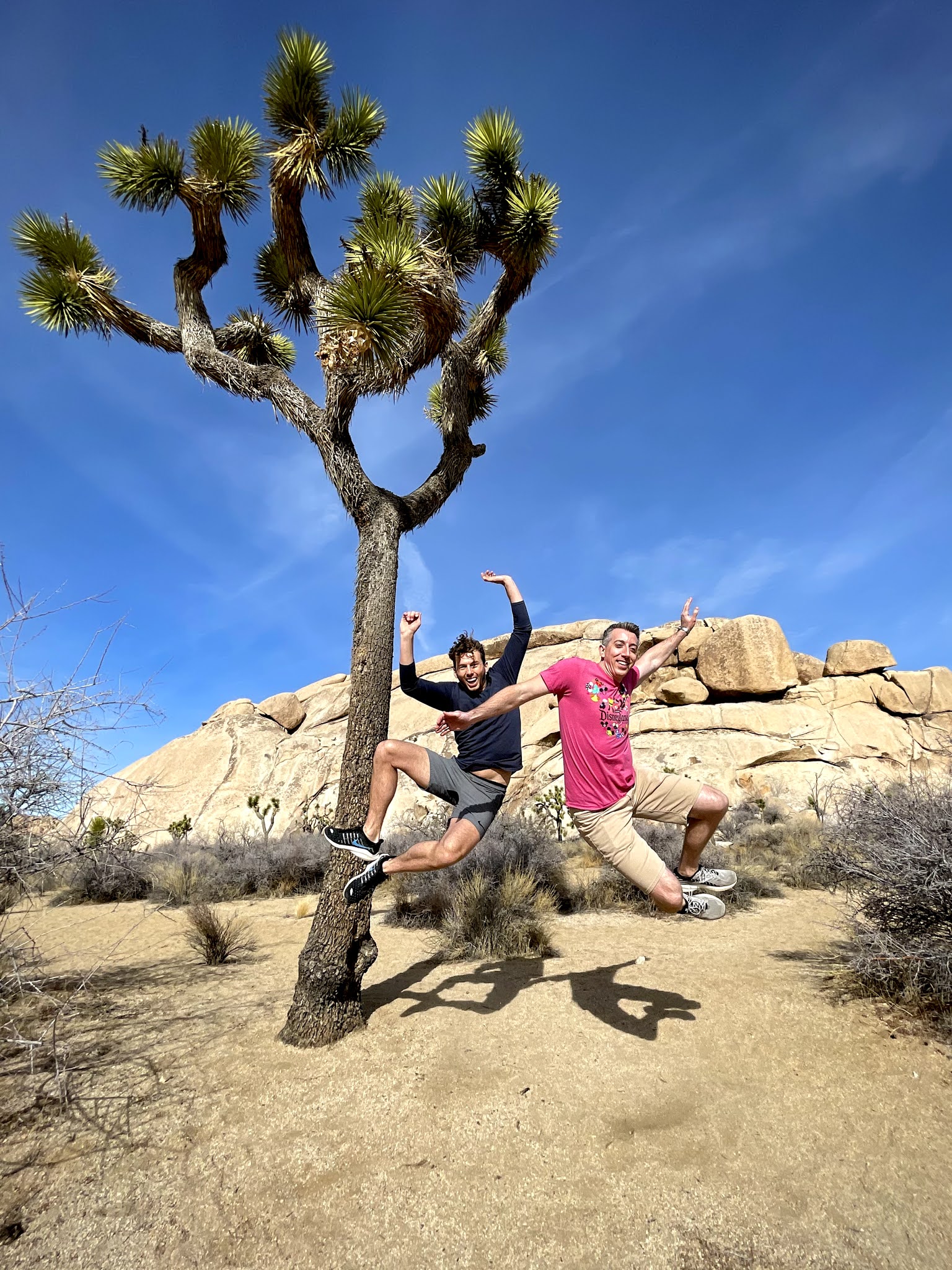
While in Palm Springs we took a day trip to Joshua Tree National Park. My dad loves the National Parks. More than once he said, “I can’t believe I’m actually here. It doesn’t feel real. I never thought I’d be here.” Charlie was passing through town randomly and spent the day with us at the park. He was doing his typically Charlie thing and taking tons of photos for Instagram. We watched him try to land a few flips, but never land them quite right. Right before his fourth attempted my dad shouted, “You got this, Charlie! This will be the one! You’re gonna land this one perfectly!” And that is most Buzz Schilaty thing he could have said. My dad encourages, he cheers, and he builds people. He’s mostly to blame for my overconfidence and my belief that I’m awesome and can change the world. Because that’s how he always talked to me. 


Today we’re getting back on a plane. We’re flying back to Washington. Back to my dad’s new life living in a house all by himself. I’ll be there for a few more days to help ease him into his new normal and curb some of the pain of his loss. My heart broke for him this last week and I’ve also been so proud of him. I don’t know what the next years of his life will look like, and I’m going to try not to even guess, because I think he’s going to surprise me. 


Me, Lindsay, dad, Marilyn, and Mike


I can't do a flip, but I can barely click my heels

Mom in her new place thrilled to be folding socks

Wednesday, January 13, 2021

I Knew When to Come out

For years I surrounded my secret in protective armor, afraid of letting anyone else see what I was hiding. Would they hate me as much as I hated myself? And yet at the same time I yearned to be vulnerable. I yearned to be understood and to have someone to talk to. But being vulnerable was super risky. Removing the metaphorical armor would leave me exposed to truly being hurt. I was terrified of sharing my secret and then having nothing to deflect the jabs and punches and strikes that I feared would come. No one could hurt me more than a person that I had opened up to. 

There is a very specific feeling I get when I know I'm supposed to come out to someone. It’s hard to describe, but it's like a nervous, courageous sort of feeling. There’s a stirring inside of me and my heart pounds. It's not anxiety, but more like an invitation that comes from inside of me. When this happens I need to decide if I’m going to trust this feeling or listen to my fear.

I didn't feel prompted to share my orientation with anyone until after my mission. I returned to BYU and dove into dating just like I was supposed to. As I searched for an eternal companion the reality that I was gay was at the forefront of my mind like never before. One night I was sitting in a car with a good friend from my mission. He was telling me about some of his life troubles and I felt this intense need to reciprocate his openness and tell him I was attracted to men. But I was terrified and said nothing. Experiences like this happened again and again. A friend would open up in a private setting and I would feel this stirring inside of me that I would ignore because of fear. 

I wanted to let people into what I was experiencing so badly, but I couldn't because of fear. The Lord said to Joseph Smith, "But with some I am not well pleased, for they will not open their mouths, but they hide the talent which I have given unto them, because of the fear of man" (D&C 60:2). Being gay clearly isn't a talent (but if it were I'd hope to win some kind of prize), but I was hiding important experiences because I was afraid. 

Even after I started coming out it was often lacked the courage to be vulnerable when I got that “it’s time to come out” feeling. I would sometimes be so worried that I felt physically ill. I would hesitate and not initially act on the prompting. But as I got more and more used to what the Spirit was encouraging me to do, it got easier and I became more confident. So when I got that feeling while teaching Elders Quorum I came out. When I got that feeling during a 5th Sunday lesson at church I came out. When I was meeting with my bishop for the first time and got that feeling I came out. And every time I responded to that prompting something wonderful happened. Every time there was some kind of tangible confirmation that coming out in that setting was the right thing to do. Every time I felt uplifted and edified, and so did those with whom I had shared. Quite a contrast from hiding in fear and saying nothing. 

Provo Utah Temple 2018
When I was 33 I was working as a temple worker in the Provo Utah Temple. I was out publicly and anyone who knew me knew I was gay. But I decided to not come out to my fellow temple workers. I didn't want to make anyone feel uncomfortable and I didn't want anyone to say something unkind to me in the temple. My logic told me that it would be easiest to just play straight. One day I was talking with an older gentleman on my shift while we were waiting to do an assignment. He asked me what I planned to do after I graduated with my MSW. I told him that I hoped to work with LGBTQ clients and their families. Right then we had to fulfill an assignment and he said sternly, "Find me after. We need to talk." I immediately started to worry about the lecture I was going to receive on the ills of homosexuality. 

I found him later and we sat on a padded bench. He asked me why I was interested in working with LGBTQ clients. The feeling I knew so well stirred inside of me so without hesitating I told him I was gay. He then got emotional and said, "My son is gay, too." We sat on that bench talking for quite a while. When the conversation was over he thanked me profusely for trusting him because he had needed someone to talk to that day. His last words to me were: "Providence brought us together today." 

This feeling came multiple times as I interacted with temple workers on my shift. It led to beautiful conversations every single time. Even though I had planned to be silent, I was frequently prompted to speak. My coming out in those settings wasn't to get attention, or to prove a point, or to increase LGBTQ visibility. I simply came out in the temple because I felt prompted to do so. 

Mitch, the first person I came out to

I for sure don't know what any other LGBTQ person should do. But what I do know is that I missed a lot of opportunities to come out because I was scared. I also know that waiting until I was 30 to come out publicly was the right thing for me for a number of reasons. I came out on my blog at that time because I had come to recognize when the Spirit was prompting me to speak.

I've heard a number of friends share similar stories of learning to recognize a feeling that invites them to come out. I don't know when the right time to come out is, but God does and He'll help us know. Immense goodness has come into my life as I have followed the repeated promptings to come out. When I hid because of fear, all the kindness that was offered to me was also somewhat deflected by my protective armor. When I removed my armor and let myself be seen, I finally felt the full embrace that my loved ones were offering me. That was the experience God was inviting me to have. 

Tuesday, November 10, 2020

The Power of Proximity


I totally have a crush on Sharon Eubank. My admiration for her deepened during her most recent General Conference talk when she said, “This world isn’t what I want it to be. There are many things I want to influence and make better. And frankly, there is a lot of opposition to what I hope for, and sometimes I feel powerless.” When I heard her say this I thought, I feel you, Sister Eubank.

“We may not yet be where we want to be, and we are not now where we will be,” Sister Eubank continued. “I believe the change we seek in ourselves and in the groups we belong to will come less by activism and more by actively trying every day to understand one another. Why? Because we are building Zion—a people ‘of one heart and one mind.’”
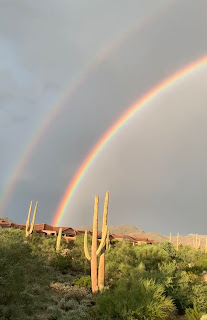
Nothing inspires me more than saguaros

Earlier this year the world was not what I wanted it to be. I saw and witnessed things that broke my heart. When the shutdown started in March I spent a few weeks in Arizona hunkered down with my friends Kevin and Allison. As I decompressed and thought about what I could do to make the world better, it occurred to me that I could teach a class. So I wrote a proposal for a course that was later named Understanding Self and Others: Diversity and Intersectionality. I sent the proposal to everyone in my upline at BYU and was pleasantly surprised (and so incredibly stoked) when it got approved.

As I considered possible assignments, I wanted my students to really get to know themselves and other people. So the Proximate Paper was born. The assignment is based on an invitation Bryan Stevenson made at BYU in 2018: “Our power is waiting for us, if we get proximate. We have to get closer to those places [where people are suffering] if we’re going to change the world.” Twice during the semester, my students interview someone from a different background and then write a personal reflection about the experience.

I trained the class on how to do these interviews because I wanted my students to approach others with humility and respect, and with their consent. We practiced asking to hear someone’s story and how to ask good questions (e.g. What do you wish people understood about X? Could you describe some of your most interesting experiences as X? What have you not been able to share that you would like to share?). On the day we practiced doing proximate interviews in class I jumped from one group to another to observe how they were doing. I felt like an intruder as I popped into deeply personal conversations. I was amazed that my students had been so vulnerable with each other so quickly. Simply asking sincere, open ended questions created the space for students to share their hearts. Class that day felt like a sacred space.

Grading papers is literally the worst part of teaching, so I didn’t anticipate the level of emotion I felt as I read through my students’ papers. Almost all of them interviewed people they already knew, and again and again students wrote things like, “I assumed X about my best friend, but it was really Y,” or “I thought I knew them well, but now I know them so much better,” or “we planned to talk for 20 minutes, but chatted for three hours.” My students realized that there was so much below the surface in these established relationships. Asking good questions and pausing to listen helped my students understand the people in their lives in new and deeper ways. I have permission to share a few brief stories.

One student wrote: “I was lucky enough to be able to interview my own mother for this. My mom is my hero. I truly look up to her more than anyone. Her experience is unique and messy, interesting and complicated. I know about her situation, but because it is messy, it can be hard to recall details. What I didn’t know though, were my mom’s thoughts and feelings on her identity.” Her mom is gay. She had known this about her mom for years as a fact--as a descriptor. Through this assignment, my student came to see some of the many ways that this reality has impacted her mom’s life. Just knowing a fact about a loved one doesn’t mean that they are truly known to us. That takes real work. “I learned things about my mom I didn’t know. I feel a little sad that I didn’t know these things before.”

Another student interviewed his mom who immigrated to the US before he was born. He wrote, “I learned that I am a product of many blessings and sacrifices and that it’s hard to give up your homeland and the family that are still there. It’s no laughing matter the sacrifice immigrants make to provide opportunities for their family and children.” Although he grew up knowing that his mom had immigrated, he had never really taken the time to understand the impact of her choice to leave her home country. Knowing a fact about someone is not the same as knowing their story.

As part of the curriculum, we invite guest speakers in to address different aspects of diversity and inclusion. Many of my students have told me this is their favorite part of the class. On the day of our first guest panel, one of the participants said he wanted to be a little more vulnerable and then started to hesitate. Three of my students immediately jumped in and said, “Please, we want to hear your story,” and he then shared what was in his heart. When class was over I sat in my office and cried. It was a privilege to not only hear this man’s story, but to witness my class so sincerely encourage him to share and to honor his story. My tears were tears of gratitude.

Throwback to 2018 when I got to meet Sharon Eubank!
Sister Eubank taught that we make the world better by genuinely trying to understand those around us. I can see this happening in my students’ papers and in their interactions in class. I can see hearts and minds coming together and my students can, too. I never expected grading papers to be a manifestation of hearts and minds coming together to build Zion.

There are many things in the world that I want to influence and make better. Sometimes the prospect is daunting. The world is not where I want it to be. But I can teach a class. And through this class I can encourage others to embrace Sister Eubank’s call to build Zion. Because building Zion is a cooperative endeavor of vulnerability, compassion, and righteousness.

Zion needs you too. Please take time to sit down with someone you already know and invite them to tell you their story. Because as Sister Eubank said “the change we seek in ourselves and in the groups we belong to will come ... by actively trying every day to understand one another.”


Monday, August 17, 2020

How to Avoid Being a Jerk to Gay People


My mom gets cold easily

I don't know about you, but I have a lot of experience being a jerk. I rarely behave like a jerk on purpose, it happens most frequently with the people I love, and almost always because I lack empathy.  


For example, I’ve been a total jerk to my dad. His life has gotten considerably harder since my mom was diagnosed with Alzheimer’s four years ago. I have recommended to my dad multiple times that he move my mom to an assisted living facility. The solution is so obvious to me that I can’t help but tell him what to do over and over again. But he doesn’t listen to me, so I watch him choose to make his life harder by keeping my mom at home.  

Classic Buzz and Ginny
A few months ago, I was staying with my parents for a few weeks. I don’t recall what prompted it, but I decided to take a mental journey. I imagined what it would be like to do what I had so often recommended--to take my mom to an assisted living center. I pictured us packing her bags. I pictured us driving her to her new home. I pictured us helping her set up her room and telling her how much she was going to love it there. I pictured us hugging her, saying goodbye, and leaving her. I pictured us driving away and getting home and sobbing. And then I pictured her alone in an unfamiliar place. After thinking through that possibility, I realized in that moment that I was telling my dad to do something that I couldn’t do. 

My advice to my dad had been the wrong advice because I didn’t truly take the time to understand the implication of my advice on my mom. That night I wrote a long entry in my journal praising my dad. He was giving my mom the best gift he could by allowing her to be in her home, and he was doing it at great personal sacrifice. I had been so focused on fixing his problem that I failed to understand his commitment to his wife.  

In Acts 15, amid the rapid influx of gentiles into the church, the leaders of Christ’s Church had a meeting to figure out what to do with all the new members. Some of the Pharisees in attendance insisted that the Gentile converts needed to keep the law of Moses. I don’t know if they this took this position because of centuries of tradition, or because the Gentiles were different from them and made them feel uncomfortable. Whatever the reason, these Pharisees were kind of being jerks. 

In the midst of their lively debate, Peter rises from his seat and asks, “Now therefore why tempt ye God, to put a yoke upon the neck of the disciples, which neither our fathers nor we were able to bear?” In essence Peter asked: Why are you asking them to do something you couldn’t do? Peter asked them to take a mental journey—to put themselves in the position of the new converts—and really try to understand what they were asking of the Gentiles. Peter wanted them to understand that they would not be capable of making the sacrifice that they were advocating for.

A lot of well-meaning people have been truly unkind to me and other LGBTQ Latter-day Saints. I attribute this unkindness to ignorance and not to malice. So if you are not a gay Latter-day Saint I’d like to make an invitation. Take some time, some real solid thinking time, to go on a mental journey. Put yourself in the shoes of your LGBTQ brothers and sisters and ask yourself what you would do if you experienced their challenges. Here are some situations to consider that reflect some of my lived experience: 

What would you do if you were taught that the whole point of life was to marry someone that you weren’t attracted to? 

What would you do if you fell profoundly in love with a person (who by some miracle seemed to love you even more), but if you were to marry them you’d be barred from heaven?  

What would you do if people at church thought of you and even called you a pervert? 

What would you do if people told you that your orientation was the result of sexual abuse and bad parenting? 

What would you do if you wanted to move forward in the Church and be with a partner, but you knew you couldn’t do both things? 

Agency is contextual and our decisions are not made in a vacuum. The majority of my LGBTQ Latter-day Saint friends have distanced themselves from the Church in some way. I know very few like me who are committed to a life of singleness and committed to moving forward in the Church. Why are there so few of us? Where are all the happy, thriving, single gay Latter-day Saints? Of the LGBTQ Latter-day Saints you know, how many of them have stepped away from the Church? Why is that? What isn’t working? I think that part of the way that we are unintentionally being jerks is by completely blaming their leaving on them. 

That's definitely my shirt
I know they’re not meaning to, but parents can really be jerks to their LGBTQ children. I worry that some parents are afraid that the Atonement won’t work for their kids. So they push them to make the “right” choices. They can’t understand why their kids would make choices different from the ones they have made. 

If parents and have taught their children truth, and have helped them have experiences with the Spirit, then they just have to trust that their kids can find their path. I have been able to make the choices I have made because my family gave me the freedom to make hard choices. Because there was no one putting a yoke on my neck. When parents express confidence in their children’s ability to receive revelation then they are more likely to seek that revelation and follow it. If we push people to do what we want them to do all we’re really doing is pushing them away. And we’re kind of being big jerks. 

To quote Disney’s Pocahontas, “If you walk the footsteps of a stranger, you’ll learn things you never knew you never knew.” If you want to avoid being a jerk to the LGBTQ people in your life, never ask them to do something that you yourself couldn’t do. If you want to avoid being a jerk, take some time to really put yourself in their shoes. If you want to avoid being a jerk, imagine how you would employ your agency given the context of their lives. Imagine how you would want someone you love to react to your difficult decisions—decisions that might seem completely foreign to them. We can never really know what it’s like to be someone else, but it’s a real gift when we try. And we can trust the Savior to guide our actions, and the paths of those we love.

Monday, July 27, 2020

I Work in Building Named after a Man Who Said Homophobic Things

Me in front of the Wilk in 2018

Disclaimer: Like all my posts, I speak only for myself here. I do not speak for my employer nor do I speak for other queer people associated with BYU. And I certainly don’t speak for the many people who are calling for buildings to be renamed and monuments to be removed. You have not yet understood my message if you attempt to use my words to silence or diminish the voices of those who are expressing pain and hurt and are asking for change.  


“Given the choice of anyone in the world, whom would you want as a dinner guest?” I read the first question from the 36 Questions that Lead to Love to my brother. When it was my turn I responded, “Ernest L. Wilkinson.” 


“Who?” my brother asked.


“He was president of BYU in the 50s and 60s, and he said some pretty homophobic things. I think if he got to know me, I could change his mind.” 


Despite spending nine years of my life at BYU, I really know very little about Ernest L. Wilkinson. Most of what I know about him I read in a biography about someone else. During my eight years as a student I was in a building named after him almost daily. And now as an employee, I sit in an office in a building that bears his name. 


It occurred to me one day while I was sitting in my office in the Wilkinson Student Center, that I was sitting in building named after someone who I don’t believe would have supported the hiring of an openly gay person like me. I tried to sit with this feeling and explore it. As I sat in my office chair, swiveling back and forth, I recognized that the feeling I was experiencing was hope. 


I don’t know how all the LGBTQ students, faculty, and staff at BYU feel about regularly entering a building named after someone who said homophobic things. In fact, I’m confident that others feel quite differently than I do—and that’s okay. But to me, working in a building named after Ernest L. Wilkinson feels like a victory. It feels like progress. And it feels like a small bit of redemption.


Not everyone was homophobic in Wilkinson’s day. It would be unfair to dismiss what he said because of the time he lived in. I believe he could’ve been more kind and I wish he had been. From a quick Google search, I learned that he died six years before I was born. We didn’t even get the chance to know one another. 


When I review my journals from my early 20s, I find a lot of homophobic things that I believed and wrote. It’s frankly quite disturbing the things that I believed about homosexuals, and I’m the gay one. Had I died at 23, the only writings I would have left on LGBTQ issues would have been rather embarrassing. My views on same-sex attraction didn’t start to seriously change until I neared 30. That’s when I really started to get to know some gay people. I could hate myself just fine, but once I started to really get to know LGBTQ folks, my heart shifted and changed rapidly. In the last seven years I have experienced a monumental shift in my thinking simply because I really got to know people that I had judged and misjudged. Ernest L. Wilkinson died 42 years ago. I wonder how his heart would’ve changed with an added 42 years of growth and experience. 


I believe in redemption. I believe that most people, when given the chance, will do better and be better (I mean, that’s the whole message of The Good Place). I’ve seen this happen again and again. I don’t ever ask for it or expect it, but a lot of people have apologized to me since I came out. They apologize for things they said or did that I usually don’t even remember. But they remember, and they want me to know that they’re sorry and are going to be better. I don’t know exactly what dinner with Ernest L. Wilkinson would look like, but I imagine there would be some sacred moments of growth for both of us. 


The lyrics from this short song from Steven Universe encapsulate the message I would have for the man that the building I work in is named after:


I don't need you to respect me, I respect me
I don't need you to love me, I love me
But I want you to know you could know me
If you change your mind
Change your mind


I’ve spent so much time in this building. As a gay student, I sat on a stage in the Wilkinson Student Center with three other LGBTQ students as we shared our experiences as sexual and gender minorities. As a gay student, I sat in the Wilkinson Student Center as a panelist at BYU’s Religious Freedom Annual Review and spoke about being LGBTQ at BYU. As a gay employee, I’ve sat in my office in the Wilkinson Student Center with numerous LGBTQ students as I have heard their stories. And as an openly gay employee working in the Wilkinson Student Center, many people have now had the chance to get to know me. 


Fun photos, huh?

Even for the students who don’t get to know me personally, I have tried to make the Wilkinson Student Center more welcoming and beautiful. The hallway leading to my office was just bare, white walls when I was hired last August. At the end of last year, I volunteered to choose pictures to be hung on the walls. I chose seven stock photos of BYU campus that I thought were beautiful and fun. My hope is that the pictures will bring a smile to the faces of the students who walk down the hall. This corner of the Wilkinson Student Center is a little better because I work here, and that feels like a victory to me. I believe that as more openly LGBTQ people are hired or come out at BYU, and as all of us who work and study at BYU, whether we’re LGBTQ or not, try to make campus more beautiful and welcoming, that the campus will be more and more enriched. And I believe that if Ernest L. Wilkinson could get to know all of us, and in particular learn how integral to our BYU community our LGBTQ members are, that he would be thrilled to have us working in a building that bears his name.


I was unaware of the homophobic things that Ernest L. Wilkinson said until just a few years ago. It was painful to come across and read his words. I hurt for the LGBTQ students who heard him say those awful things back when he was university president. And I felt grateful that those words were no longer being said. I also wondered if his homophobic words were better kept hidden in the past or if it would be best to bring them to light again. I’m still not sure, but I purposefully haven’t shared them here. 


Now, as I think about Ernest L. Wilkinson regularly, I don’t feel a need to rename the building I work in (although there is no building I’d rather work in than the Jane Elizabeth Manning James Building). Personally, working in the Wilkinson Student Center reminds that I need to let people know me and that I need to be seen. I need to share my own story and experiences as a gay person and I need to elevated the stories of other LGBTQ people at BYU. I believe that most people who say homophobic things would change their minds if they took the chance to get to know us.